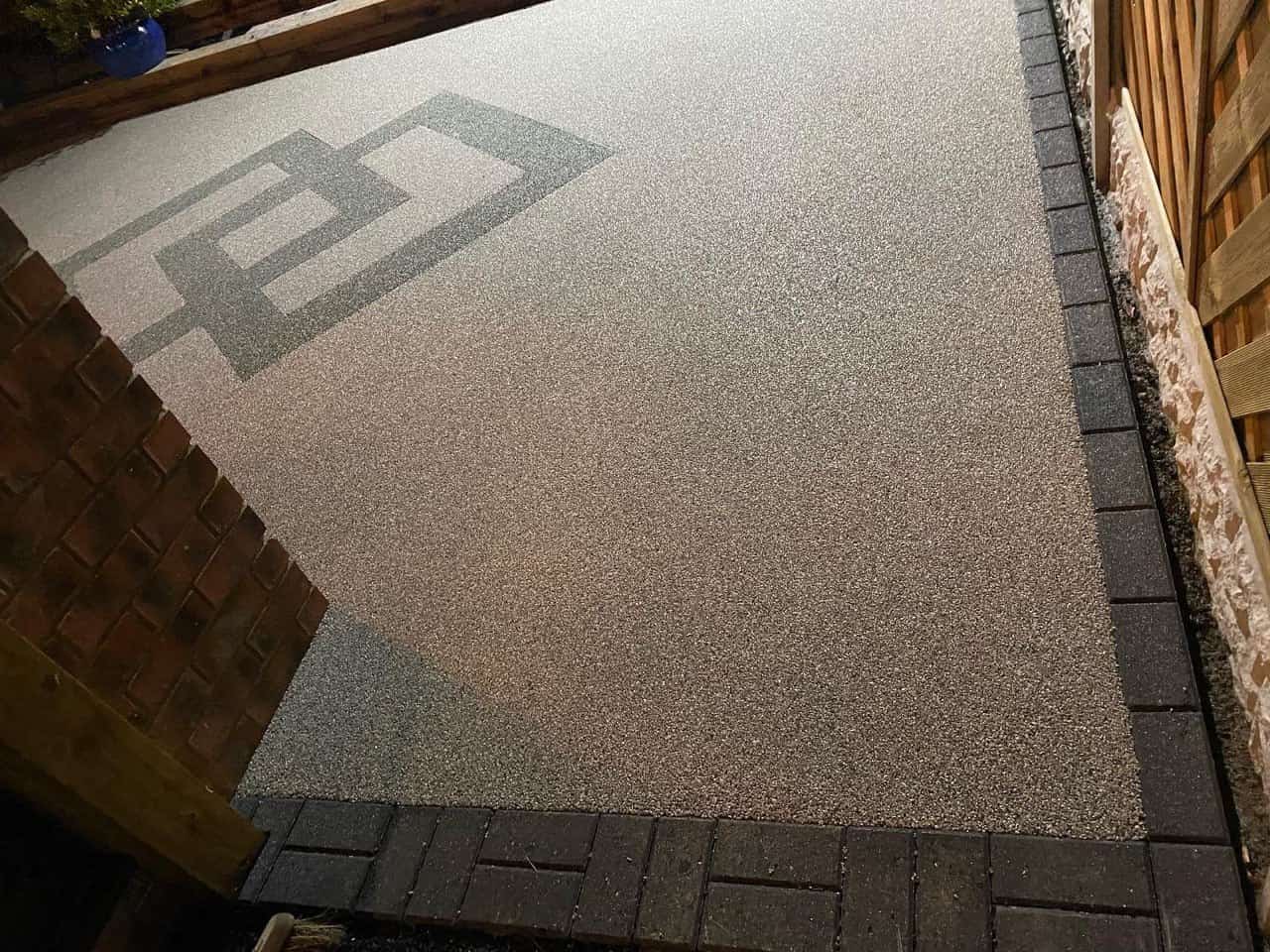
Paths are an important part of how a property functions. They connect entrances, driveways, gardens, patios and other frequently used areas, providing defined routes for everyday movement. When pathways become uneven, muddy, loose or poorly positioned, even relatively short journeys around the property can become inconvenient.
Resin bound surfacing can provide a practical solution for creating or improving pedestrian routes. Because the aggregate is mixed with resin before being laid, the completed surface forms a firm, continuous finish rather than behaving like loose stone. When supported by suitable preparation beneath it, this can create a pathway that is comfortable to use and visually well integrated with the surrounding property.
For homeowners in Canterbury, Kent, resin bound paths can be particularly useful where existing access routes need to become more defined, consistent or practical. The effectiveness of the finished path, however, depends on considerably more than the visible resin surface.
How Can Resin Bound Paths Make Everyday Access More Practical?
A good pathway should provide a clear, dependable route between the parts of a property that people use regularly.
Resin bound surfacing can create a continuous surface without the loose movement associated with gravel or the numerous individual joints found in some paving systems. This makes it suitable for a range of garden and property access routes.
The greatest benefit comes when the complete path is designed around its intended use, including its width, route, levels, drainage, edges and supporting construction.
Creating a Defined Route Through the Garden
Without a dedicated path, people naturally create their own routes across lawns and other garden areas.
Repeated foot traffic can gradually wear these sections, particularly when the ground is wet. What begins as a convenient shortcut can eventually become a muddy or uneven route.
A resin bound path provides a clearly defined surface for regular movement.
By directing foot traffic along a suitable route, it can also help separate access areas from lawns, planting and other softer parts of the garden.
Replacing Muddy Garden Access
Muddy access is one of the clearest reasons to consider installing a proper pathway.
Grass and exposed soil can become difficult to use after prolonged rainfall. Frequent walking over the same route can compact the ground and make the problem increasingly noticeable.
A properly constructed resin bound path provides a dedicated hard surface rather than relying on changing ground conditions.
The supporting construction beneath the resin is particularly important. Simply applying a decorative surface without suitable preparation would not provide the same dependable result.
Resin Bound Paths Provide a Firm Surface
One of the practical characteristics of resin bound surfacing is that the aggregate is held together within the finished surface.
This is different from loose gravel, where individual stones can move under foot and gradually spread beyond the intended path.
A bound surface remains more consistent during normal use.
This can be helpful on frequently travelled routes where homeowners want the appearance and texture of aggregate without continually dealing with loose material moving into neighbouring garden areas.
Paths Can Connect the Driveway With the Property Entrance
The route between a driveway and entrance is used regularly and should feel like a deliberate part of the property layout.
A resin bound path can provide a clear transition between these areas, particularly where a similar or complementary surface is already used elsewhere.
The route should be planned around how people naturally approach the property rather than simply following the easiest line to construct.
Thoughtful positioning can make everyday movement more direct while creating a stronger visual connection between the entrance and surrounding outdoor areas.
Side Access Routes Can Become More Practical
The side of a property often serves an important practical purpose.
It may provide access between the front and rear garden or be used when moving wheelie bins, gardening equipment and other everyday items.
These routes can also be relatively narrow and may receive limited sunlight, allowing unsurfaced ground to remain damp for longer periods.
Installing a defined resin bound path can create a more dependable route through these areas, provided that width, levels and drainage are properly considered.
Garden Paths Can Connect Outdoor Living Areas
Access is not limited to getting from the pavement to the front door.
Within the garden, pathways can connect patios, lawns, seating areas, sheds and other frequently used spaces.
A well-planned path can make these different sections feel more connected.
Rather than crossing grass or planting areas every time someone moves through the garden, a permanent route provides a clear circulation pattern that can improve how the complete outdoor space functions.
Resin Bound Surfacing Can Work With Curved Paths
Not every garden path needs to follow a straight line.
Resin bound surfacing can be formed into different shapes, making it suitable for routes that curve around lawns, planting areas and other garden features.
This flexibility can be useful where a direct straight path would interfere with the existing layout.
The shape should still have a practical purpose. Curves work best when they respond naturally to the garden rather than making the route unnecessarily long or awkward.
Path Width Should Reflect How the Route Will Be Used
A pathway should not be designed solely around appearance.
Its width needs to reflect the type and frequency of movement expected along it. A lightly used garden route may have different requirements from a main path connecting the driveway and property entrance.
Routes used for moving bins, wheelbarrows or gardening equipment should also provide sufficient practical space.
Considering these requirements before installation can prevent a finished path from feeling unnecessarily restrictive.
Smooth Transitions Improve the Overall Route
A good pathway should connect naturally with the areas at either end.
Poor transitions can leave unnecessary changes in height where the path meets a driveway, patio or other surface. These interruptions can make an otherwise practical route less comfortable to use.
Finished levels should therefore be planned as part of the complete installation.
For properties in Canterbury, considering the relationship between existing surfaces and the proposed resin path can help create a more coherent access route.
Edge Restraint Helps Define the Path
The edges of a pathway contribute to both its appearance and construction.
Suitable edging creates a defined boundary between the resin bound surface and surrounding lawns, planting beds or other materials. It can also help maintain a neat shape, particularly where the path incorporates curves.
Edging should be planned alongside the path rather than treated as a finishing detail afterwards.
The choice and positioning of the edges can influence how successfully the pathway integrates with the wider garden.
Drainage Remains an Important Part of Path Design
Any permanent outdoor surface needs to be considered in relation to rainfall.
Resin bound surfacing can provide a permeable finished layer when installed as part of a suitable system, but the performance of the overall path depends on the construction beneath it.
A permeable upper surface cannot compensate for unsuitable supporting layers or poorly planned levels.
Ground conditions, the base and surrounding surfaces should therefore all be considered when planning how water will behave around the completed path.
Surface Levels Should Be Planned Before Installation
A pathway needs appropriate levels throughout its complete length.
Unexpected dips can create low points, while poorly planned transitions can affect how the path meets adjoining areas.
Establishing levels during preparation provides greater control over the finished route.
This is particularly important when a path needs to connect several existing surfaces whose heights may already differ.
Good planning beneath the finished resin can make these transitions considerably more natural.
The Base Has a Major Influence on Long-Term Performance
The resin bound finish may be the visible part of the pathway, but its performance depends heavily on what sits beneath it.
An unstable or inadequately prepared base can move over time. Any significant movement beneath the resin surface can eventually affect the finish above.
Correct preparation should therefore be treated as a fundamental part of the installation rather than something hidden and unimportant.
The intended use, existing ground and current surface condition all need to be considered before determining the appropriate construction.
Can Resin Bound Surfacing Be Installed Over an Existing Path?
Sometimes an existing surface may provide a suitable basis for further work, but this should never be assumed simply because it appears reasonably solid.
The condition, stability and construction of the existing path need to be assessed.
Significant cracking, movement or settlement can indicate underlying weaknesses that should not simply be concealed beneath a new surface.
Where existing construction is suitable, retaining it may be possible. Where it is not, appropriate preparation provides a more dependable foundation for the resin bound finish.
Resin Bound Paths Can Reduce Loose Surface Movement
Loose aggregate paths can suit many gardens, but the movement of individual stones is not always desirable on frequently used access routes.
Material can gradually migrate towards lawns, borders and adjoining surfaces. Regular foot traffic can also create areas where aggregate becomes displaced.
Because resin bound aggregate is held within a continuous surface, this type of movement is substantially reduced.
This can make frequently used routes easier to keep defined and can reduce the amount of loose material spreading into neighbouring areas.
A Continuous Surface Can Make Routine Garden Tasks Easier
Garden paths are used for more than walking.
Wheelie bins, wheelbarrows, garden equipment and other items may regularly travel along the same routes.
A firm, continuous surface can make these everyday tasks more convenient than travelling across soft ground or loose aggregate.
This is particularly relevant when planning access between storage areas, side entrances and the front or rear of the property.
Thinking about these routine movements can help determine where a new pathway will provide the greatest practical benefit.
Paths Can Help Protect Lawn Areas From Repeated Traffic
A lawn may remain in good condition when used occasionally but can deteriorate where it becomes the main route through the garden.
Repeated traffic tends to concentrate along the most convenient line.
A properly positioned resin bound path can redirect regular movement onto a dedicated surface while allowing surrounding grass to remain primarily a landscaped area.
The path should follow a logical route so that people naturally use it rather than continuing to take shortcuts across the lawn.
Resin Bound Paths Can Complement Existing Landscaping
A practical path does not have to feel disconnected from the rest of the garden.
The aggregate appearance of resin bound surfacing can work alongside lawns, planting, patios and other hard landscaping when the layout is planned as a whole.
Shape, edging and the selected aggregate finish can all influence how the pathway relates to its surroundings.
The aim should be to create a route that looks as though it belongs within the garden rather than appearing to have been added without consideration of the existing layout.
Aggregate Selection Can Influence the Finished Appearance
Resin bound surfacing is available with different aggregate blends, allowing the finished path to have varying tones and visual characteristics.
Selection is most effective when the wider property is considered.
The path may need to relate visually to a driveway, patio, building materials or other garden features. Choosing a finish in isolation can make it more difficult to achieve a coordinated result.
Where several outdoor areas are being considered, viewing them as one overall scheme can create stronger visual continuity.
The Same Surface Can Connect Different Parts of the Property
Where resin bound surfacing is used elsewhere around a property, extending the same or a complementary finish onto paths can help unify the outdoor layout.
The driveway, entrance path and garden routes can remain clearly separate functional areas while sharing a common surface character.
This can be particularly effective where previously unrelated materials have made the exterior feel visually fragmented.
Consistency should still be balanced with practicality, ensuring each area is constructed appropriately for how it will actually be used.
Existing Uneven Paths May Need More Than a New Surface
If an existing pathway has sunk or become uneven, applying a new finish alone may not solve the problem.
Movement at the surface can indicate that supporting materials beneath it have changed or deteriorated.
The cause should be identified before resurfacing is considered.
Localised defects may require preparation or correction, while more widespread instability can require a different approach. The objective is to create a suitable foundation rather than use resin simply to conceal existing irregularities.
Planning the Complete Route Produces Better Results
Path installation should begin by considering where people actually need to travel.
Entrances, gates, driveways, patios, storage areas and frequently used garden features can all influence the most logical route.
It is also useful to consider:
- how frequently the path will be used
- whether bins or garden equipment will travel along it
- the width required for comfortable access
- existing ground and surface conditions
- changes in level
- drainage and water movement
- connections with existing hard surfaces
- surrounding lawns and planting
Planning these elements together can create a pathway that improves the way the property functions rather than simply adding another decorative surface.
Professional Installation Adds Value Below the Surface
The quality of a resin bound path should not be judged only by its finished appearance.
Preparation, base stability, edge restraint, levels and careful installation all influence how successfully the surface performs.
At Canterbury Resin Driveways, we consider how the proposed pathway will be used as well as how it will fit into the surrounding property. This allows the preparation and surfacing approach to reflect the practical requirements of the route.
For homeowners in Canterbury, Kent, this can help create paths that provide useful everyday access while complementing the wider outdoor space.
Conclusion
Resin bound paths can improve access around a property by creating firm, clearly defined routes between entrances, driveways, gardens, patios and other frequently used areas. They can be particularly useful where existing access involves muddy ground, loose aggregate or worn routes across lawns.
However, the finished resin surface is only part of a successful pathway. The route, width, base preparation, levels, drainage, edging and connections with surrounding areas all contribute to how practical the completed path will be.
If you are considering a new resin bound path at your property in Canterbury, Kent, contact Canterbury Resin Driveways. We can assess the existing area and help determine an appropriate path layout and surfacing approach based on how you need to move around your property.
Call us on: 01227 538086
Click here to find out more about Kent Resin Services
Click here to complete our contact form and see how we can help with your driveway needs.